


Varicose veins are a pathology that requires constant monitoring and adherence to medical recommendations.The symptoms of the disease (increasing the lumen of the vessels, thinning of their walls, blockage) will progress if all the provoking factors are not excluded.
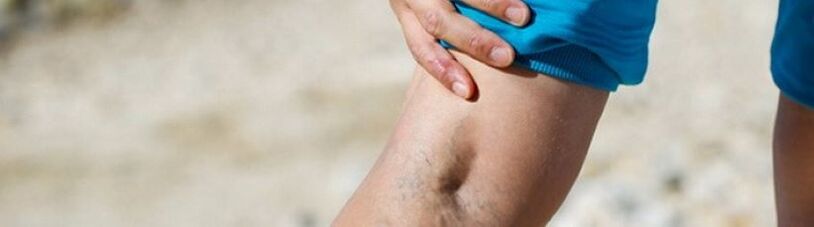
What is not allowed for varicose veins is one of the main questions that interests the patient.Failure to comply with the main restrictions can lead to a decrease in the effectiveness of therapy.
Ten Basic "Don'ts" for Varicose Veins
- You can not rely on ointments and pills.There are no miracle ointments or magic pills for varicose veins.There are drugs that facilitate blood flow, there are substances that strengthen the vessel wall, but these are all temporary means that can be used in addition to the main treatment.They relieve the condition: with the help of drugs, you can relieve swelling and pain, but do not normalize the condition of the veins.
- You cannot treat yourself.Varicose veins are not a pathology that can be treated or disappear on their own.The problem will not "solve", so if you have symptoms of varicose veins, you should see a doctor.
- You can not treat yourself with leeches.There is a strong belief that varicose veins can be treated with leech.We do not recommend trying this method.Consult at least one specialist, in this case a phlebologist.Yes, leeches secrete substances that reduce blood clotting.It facilitates blood flow, but has no effect on varicose veins.Aqueous secretion does not strengthen the venous wall and does not lead to the normalization of the condition of the blood vessels.
- Compression stockings should not be worn intermittently.The main requirement for a patient with varicose veins is to wear compression stockings.This helps to normalize blood circulation, and if you have undergone treatment (for example, sclerotherapy), then compression stockings help to heal better.It is necessary to wear socks or tights exactly as recommended by the doctor: if you do this from time to time, the therapeutic effect will disappear.Of course, it is difficult to wear knitwear and it is uncomfortable to walk in it in the hot season, but all these points can be discussed with a phlebologist and the most convenient option can be found.
- If surgery is recommended to you, you should not delay it.Doctors note that varicose veins never go away on their own, and over time, the condition of the veins only worsens.Therefore, if the phlebologist has advised you to undergo surgery now, you should not delay it.
- Massage for varicose veins does not improve the condition;moreover, massage for varicose veins is not indicated and can have a negative effect on the legs.Especially forceful, rubbing, squeezing the legs massage.And while many patients report a sense of relief after a massage, this may be due to the reduction of post-procedure swelling.But in the long run, massage can have a negative effect on the health of the veins.Especially if these are special types of massage, such as honey, cupping, vacuum, anti-cellulite.
- It is also not recommended to go to the bathroom.Yes, a contrast shower is indicated for varicose veins - the temperature difference "exercises" the vessel wall.However, the temperature contrast that usually occurs in a bath is too great and can have a bad effect on the veins.Therefore, if varicose veins are diagnosed, it is better to forget about the steam room.Or postpone it until you have solved your vascular problems.A diagnosis of varicose veins does not mean the end of a healthy life.It is a chronic disease, but it is well studied.A few decades ago, serious operations to remove veins are a thing of the past: today, minimally invasive interventions that protect the veins are in the first place.And then take preventive measures.
- What foods you should not eat if you have varicose veins:
- Sweet and floury.It's about limited intake, not completely eliminating them from the diet.Excessive consumption of sweets and baked goods can lead to obesity and therefore increase the load on the blood vessels of the legs.
- Animal fats.Intake of butter and fried meat is limited.Cholesterol contained in these products causes unwanted changes in the vascular bed.
- Salty, spicy food.Consumption of products from this category causes water retention in the body and the formation of edema.This, in turn, increases the load on the vascular bed, which is completely unacceptable for varicose veins in the legs.
- Alcohol.Contrary to the belief that alcohol has a beneficial effect on blood vessels, if you have severe varicose veins, you should not drink it.Drinking alcoholic beverages leads to short-term dilation and then long-term spasm of blood vessels.The thin walls of varicose veins cannot cope with such a load: the veins are damaged and blood begins to flow.In addition, it is not recommended to drink alcohol due to the increased risk of blood clots.
- Coffee.Alcohol weakens intestinal motility and can cause constipation, which is extremely undesirable for varicose veins of the rectum (hemorrhoids).If it is extremely difficult to give up coffee, its intake is limited to 2 cups a day.
- chicory.This plant is actively used as a harmless coffee substitute.However, not all patients know that if you have varicose veins, why you should not drink not only coffee, but also chicory.Drinking a drink from this plant leads to thinning of the blood, expansion of already thinned vessels and increased wall permeability.This significantly increases the risk of bleeding from the affected vessels.For this reason, it is not recommended to drink a lot of chicory for varicose veins.
- Celery.Although the plant is included in the list of dietary products, its use for venous pathology is undesirable.The answer to why you can't eat celery for varicose veins lies in its effect on blood vessels, which is similar to chicory.
- Not all physical exercises are indicated for damage to the venous bed.In order to understand what kind of sports it is impossible or even dangerous to do with varicose veins, you should pay attention to the presence of force or impact loads in it.
Among the prohibited:
- weightlifting;
- running - sprint, marathon;
- football, volleyball - allowed at the initial stage, but with a bandage of the lower limbs.
Lifting heavy loads in a constant position is contraindicated not only for varicose veins of the lower extremities, but also for damage to the veins of the rectum.Strength training can cause hemorrhoids to prolapse and then strangulate.In such cases, emergency surgery may be necessary.
What exercises should not be done with varicose veins of the legs:
- to squat;
- jumping (especially skipping rope);
- exercises with a platform (step aerobics).
- Do not take hormonal drugs without a doctor's prescription
This mainly applies to women using oral contraceptives.Some drugs that prevent pregnancy are hormonal.Their use causes blood to thicken and therefore creates an additional risk of thrombosis.Hormonal contraceptives should be taken only after prior consultation with your doctor.